
What the Critics Are Saying...
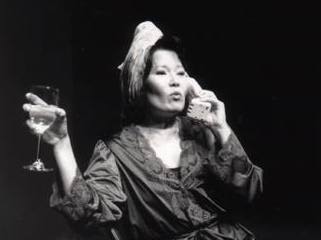
COMING INTO PASSION/SONG FOR A SANSEI
"Like a memorable cognac, Jude Narita's award-winning one-woman show, Coming into Passion/Song for a Sansei, burns clean through your consciousness, leaving you breathless and astonished. Narita's passion is the passion of an artist: her song, the song of a warrior...Every vignette is solid, every character fully realized. Narita knows how to tell a story, convey the heart of a character, and take us into a different culture, all at once. It's an amazing accomplishment."
--The San Francisco Bay Guardian
CRITIC'S CHOICE – "In an astonishing solo performance, Jude Narita, a versatile actress and a fearless writer, sheds an authentic, humorous, and deeply moving light on the dilemma of the Asian-American woman. Her characters are... all are believable and likable, and each proves how malignant and utterly useless any cultural stereotype is."
--Los Angeles Reader
CRITIC'S CHOICE – "...the show, written and performed by Jude Narita, is a play on stereotyped images...Narita flashes those images and their dark reflections at us, offering a glimmer of insight and illumination in the prismatic glow...This is a show about becoming visible, demystifying passion by letting it take center stage...surprising power and clarity."
--LA. Weekly
CRITIC'S CHOICE – "These vignettes - distinct and hard and etched in acid - constitute a blistering commentary on the brutalization of our world, with particular emphasis on the Asian and/or Amerasian female in it, yet ending on that shimmeringly self-assertive note."
--The Los Angeles Times
"Jude Narita should be designated a national treasure...Narita's writing and acting flows from her own very specific, very individualized experience, becoming the universal experience of everyone who has ever been misjudged, denigrated or undervalued. Her words are searing; her performance, powerful...At the end, she emerges as a strong destroyer of stereotypes and an effective builder of bridges between people."
--The Enterprise
"(Passion) is Jude Narita's love child, born and bred from her own heart over several years as a struggling actress/waitress/Asian-American/woman...Look at me, says Narita, the actress, and look at my sisters around the world. We are human, flesh and blood. And that is Narita's goal, to peel surface layers off the stereotypes and let a little light shine through, to make her audience think. Narita is a commanding stage presence, and her talents as an actress are polished and multi-faceted, an expertly cut jewel...It's about time somebody said what she has to say, and it's about time somebody listened."
--West San Gabriel Valley News Digest
"Jude Narita glows with a luster–as she cuts through the stereotypes of Asian women with delicacy, humor, and compassion...there is a magic about the performance...and there is poetry in the telling–sometimes fierce and defiant, sometimes as delicate as a water-color...Narita's performance is lustrous, shining, radiant, and precious."
--The Georgia Straight, Vancouver
"...viscerally grabs hold of stereotypes and shakes the living daylights out of them...I applaud Narita for her own personal and artistic courage."
--The Pacific Citizen
"A simple, brief performance by a solitary Asian woman at Theatre Paris last week proved conclusively that heart-stopping theater does not require glitzy sets, costly costumes, popular themes and big-name casts...Jude Narita charmed us, stopped us in our tracks and forced us to scour our white American souls for telltale stains of prejudice...Her dramatically challenging and hauntingly evocative performance piece succeeds...it leaves an impression of unadulterated strength..."
--Willamette Week, OR
"She reaches down the Well of Souls--for the grit, the flaws, the feelings, the tugging range of human emotions--then pulls them up and peaks them into performance...The portrayals are wide ranging, performed with sensitivity, dignity and humor...Through it all, Narita focuses on the human spirit--Asian, yes--but basic to all. She talks about humanity and human values."
--Pacific Citizen
"Welcome to Coming into Passion/Song for a Sansei, the one-woman tour de force by sansei (third-generation Japanese American) Jude Narita. Through the anger, pathos, and humor of her six characters, actress and playwright Narita confronts her audience with the pain, humiliation, and false expectations of Asian women, and by extension that of all people kept down by racial stereotypes."
--Intersect Magazine
"...an actress of remarkable skill, as well as a writer of considerable passion...Narita seems as the earth itself, reaching out in grief to caress her suffering children...It's a nurturing breath of fresh air to theater experiences...She also offers healing...in helping us to feel the pulse of herself and her people, she helps us to feel our own."
--Antelope Valley Press
"(Narita) is a gifted storyteller...she comes from the heart. She writes for and about women. She is Japanese-American and her stories are about Asian women. But the issues she portrays transcend ethnicity. Women from all backgrounds can identify with Narita's lines...She glided effortlessly from one vignette to another, moving in and out of several Asian identities with flawless accents and body language that matched the roles. The dream-vignettes illustrated the struggles of the women as each came to terms with her ancestry and its collision with Western culture."
--Enterprise, Davis, CA
"The skillful writing by Narita, and the subtle shifts in mood ease you away from a Eurocentric viewpoint. And so powerful is Narita that she transcends color and class, celebrating, instead, the power of universal experience: motherhood, love, loss and bereavement...Each character is so deeply researched and well-written that every phrase opens a little window into her history...But the greatest gift is Narita's performance. Never giving in to exhibitionism, Narita is a master of nuance and control."
--The Straits Times, Singapore
"Narita uses Asian American stereotypes as tools to transcend color and highlight our similarities...all people, men and women, Asian and non-Asian, should be inspired by Coming Into Passion/Song for a Sansei."
--Metro, Santa Clara Weekly
"...funny, sad, shocking, enlightening, empowering, heart-warming and vitally relevant to all of us...a consummate work of art and marvelously entertaining."
--The Honolulu Star-Bulletin
"We measure time in the theater by the amount of information received, and Narita's show is packed with it...these women deserve to be looked at...Her characters follow you home."
--The Los Angeles Times
"Don't miss this reprisal of Jude Narita's award-winning show - a sorrowful, tender, and tragicomic commentary on the exploitation of Asian women...Narita's poignant rendering of a Filipino mail-order bride, willing to accept all manner of degradation to come to the United States, is rivaled only by her lyric fairy tale inspired by letters from children who survived the Hiroshima bombing. A beautiful woman, and a gracious, graceful, and expressive performer, Narita deserves every ounce of recognition she has received."
--LA. Reader
"What is most illuminating about the show is Narita's ability to create drama out of what are essentially ordinary people. These are not the overachievers of life...but regular folks, some of them in extraordinary situations...That Narita can bring these people to life and make the audience empathize with their pain is her triumph."
--Rafu Shimpo
"...very bold, very risky, artistic move...Bravery is a good word to describe what she had done...The marvelous thing about Narita's show is that Narita lets the women she portrays tell their own stories...It's important to Narita that audiences see women of color standing against the odds."
--Tozai Times
"Narita's writing is well observed and crystal clear, and her performance contains many a subtle nuance... She often makes eye contact with the audience, and thereby accomplishes three things at once: she tells a story, illuminates a character, and takes us by the hand into new worlds all at the same time...the light that she throws on Asian American women is thoughtful, and often hilarious...The effect is extraordinary."
--Drama-Logue
STORIES WAITING TO BE TOLD
"Physically, Jude Narita has made her body into an exquisite acting instrument...all this is impressive enough to watch. but what makes Naarita's shows so compelling, ultimately, is the spirit of the woman and the artist...She creates characters compelling in their vulnerability, full of dimension and humorously aware of life's ironies."
--Antelope Valley Press
"Narita fills the expansive stage with her silken transformations...She commands the stage with a no-nonsense, unadorned style that peels away the identities of women who ultimately tell very American stories as characters who just happen to be from the Pacific Rim."
--Daily Variety
CRITIC'S CHOICE – "Aside from Jude Narita, few contemporary performer-writers can hold an audience transfixed for 90 minutes, as did such past platform storytellers as Charles Dickens, OscarWilde, and Mark Twain...With chameleon celerity, Jude Naarita can shift from dramatic to comedic characterizations, painting deft portraits of Asian women, young and old...Jude Narita gives live and dimension to each of them in a rich and persuasive performance."
--DramaLogue
"She has crafted a beautiful, flowing piece of theater which achieves a sense of healing all too rare today. We are not preached to, nor commanded to have any particular response to these rich characters; rather, Narita speaks to us tenderly, with humor, gently pleading for us simply to listen. Her stories may be intended to heal the wounds of those who have been culturally displaced. Narita declares that profound family experiences are usually the most fertile source for life lessons. More critically, they may help us achieve peace of mind. She certainly makes a convincing case."
--L.A. Village View
CRITIC'S CHOICE – "Plainly written, elegantly staged, and compassionately performed, Jude Narita's second solo show is an absorbing look at the inner workings of nine Asian women and their struggle to find a place in a fragmented America. Narita takes a straightforward, level-headed approach‹there are none of the showy contortions or histrionic tirades that so frequently sour one-person plays. She's too involved with her characters to put herself at the forefront."
--Los Angeles Reader
"Writer-performer Jude Narita has a rare gift of understanding usually reserved for the best poets and novelists. By applying a seemingly boundless human sympathy, she slowly develops epiphanies that linger long after the final curtain. Such moments are frequent in Narita's moving one-woman show at the Los Angeles Theatre Center. Ostensibly a gallery of portraits of Asian American women, this highly theatrical piece has a plain-spoken simplicity and emotional sophistication that will touch nearly everyone who encounters it...This thoroughly natural and unaffected performer plumbs the depths of her characters' souls, as naturally and freely as if she were stepping into a familiar dress."
--Los Angeles Times
"Jude Narita hits pay dirt once again doing what she does best: Providing, in her new show a series of singularly well-crafted portraits of Asian and Amerasian women that form a kind of logical sequel to her first show. Narita's Coming Into Passion demonstrated the difficulties and brutalizing effects of cultural assimilation, but her Stories Waiting To Be Told taps into those difficulties from a more philosophical perspective. Cultural difference is here taken as fact. Her concerns go on to focus on its fallout: on intergenerational differences and how women‹mothers and daughters chiefly‹cope with it. Or not. No one does this better than Narita, who can change personality with the glint of a dimpled smile, the exchange of a jacket or an ashen hesitation in the voice...Stories Waiting To Be Told are American stories, intimate stories of cultural adaptation...Narita's work is always fresh, always precise and, when the occasion calls for it, it can be profoundly moving. The writing itself has everything to do with this: Spare, pointed and in this case, larded with just enough philosophical reflection to make us sit up and take notice....One absorbs this show, as if by osmosis. And its cultural nods, however specific, will find plenty of recognition among other immigrant cultures."
--Los Angeles Times
"She's portraying Asian women not as china dolls or sexual objects but as people. She is speaking for many women hopelessly lost in the less than 1 percent female representation in the media. Now there is a voice...Narita's work is a much needed phenomenon in theater where women's parts are minimal and minority roles are even rarer. Narita's play is good for all of us who all too often see women as objects to be manipulated by the white patriarchy."
-- Daily Bruin, L.A.
CELEBRATE ME HOME
"Poet, playwright and performance artist Jude Narita performs Celebrate Me Home, the third in her trilogy of one-person plays. Rhythmic in sound and tone, with her poetic script enhanced by the sensitive interplay of lighting...Narita's extended story and use of innuendo subtly create a patchwork of two intertwined cultures, and through narrative and dialogue weave the larger tapestry of a culture's history. Her characters become socio-cultural statements, which she intersperses between inner-monologue vignettes of her personal experiences to create a shadow and light montage of concrete facts and abstract emotions. A solidly written work...the stage is hers, which she clearly commands."
--Drama-Logue
"The celebration in Jude Narita's one-woman show is one of self-realization, of coming to terms with personal, family and Asian-discrimination issues...In a tour de force segment, the award winning writer/performer appears as a pill-popping British TV actress ‹ white ‹talking on the phone to her producer about plans to play a Cambodian doughnut-shop worker in her next show. The more the character prattles idiotically on ("In those old movies, the Asian actors never seemed to feel as much as the white actors playing Asian") the more sickeningly funny it gets, imaginatively pointing up the dull-headedness of Hollywood. Other poignant portrayals are of a ditzy gal at a party blathering about the trendiness of young Asian women; and of a young tough-chick singer dying of leukemia...Narita is unfailingly believable in the skin of others."
--L.A. Weekly
"Narita's best monologues are autobiographical – her wistful reminiscences about her Japanese-born grandfather, her wry musings on a recent heartbreak...As ever, Narita is a charming, assured performer whose creative characterizations are as thought-provoking as they are entertaining."
--Los Angeles Times
"The journey is through a dark world of painful loss and rootlessness, the destination home in the sunlight of self-acceptance in Jude Narita's third one-woman show Celebrate Me Home...Narita's mode of transportation is a series of monologues, some with an autobiographical focus, others with broader messages for society...This time out, Narita is fearlessly honest in conveying the emptiness that remains when a lover leaves her for another woman and the puzzling ambivalence she felt toward her long-lived Issei grandfather...Narita confides these stories on a starkly lit stage using few props or costumes. The effect is one of personal revelation rather than an actor assuming a role, and though there is certainly some roughness around the edges, she succeeds in connecting with her audience."
--Rafu Shimpo
"I had seen her first play about eight years ago called Coming Into Passion/Song for a Sansei. It was at a small theater off La Cienega Blvd., and I was impressed with the power of a performance. Which brings us to her new play Celebrate, where she does play, among other roles, two pompous White women...on this night, the place is packed. About two-thirds of the audience is White, and all two-thirds of them go wild when Narita shares to the audience how frustrating it is to have to hear others say, "Well, you don't sound Asian."...During the rest of the performance, she shares a personal and deep quest to be loved. She also weaves a nice story, through monologue and a piece of white chalk, about a desire to feel connected to her grandfather. Try as hard as she might, Narita doesn't make the bond until after grandpa dies. When the program was over and Narita had smiled and bowed to the crowd, it seemed good and right that a person like Jude Narita was able to deliver a performance that was, for once, real. There was something noble, honest and true to her and her show."
--John Saito, Jr., Editor Rafu Shimpo